
Opossum Under Your Porch or Crawl Space? What North Carolina Homeowners Should Do
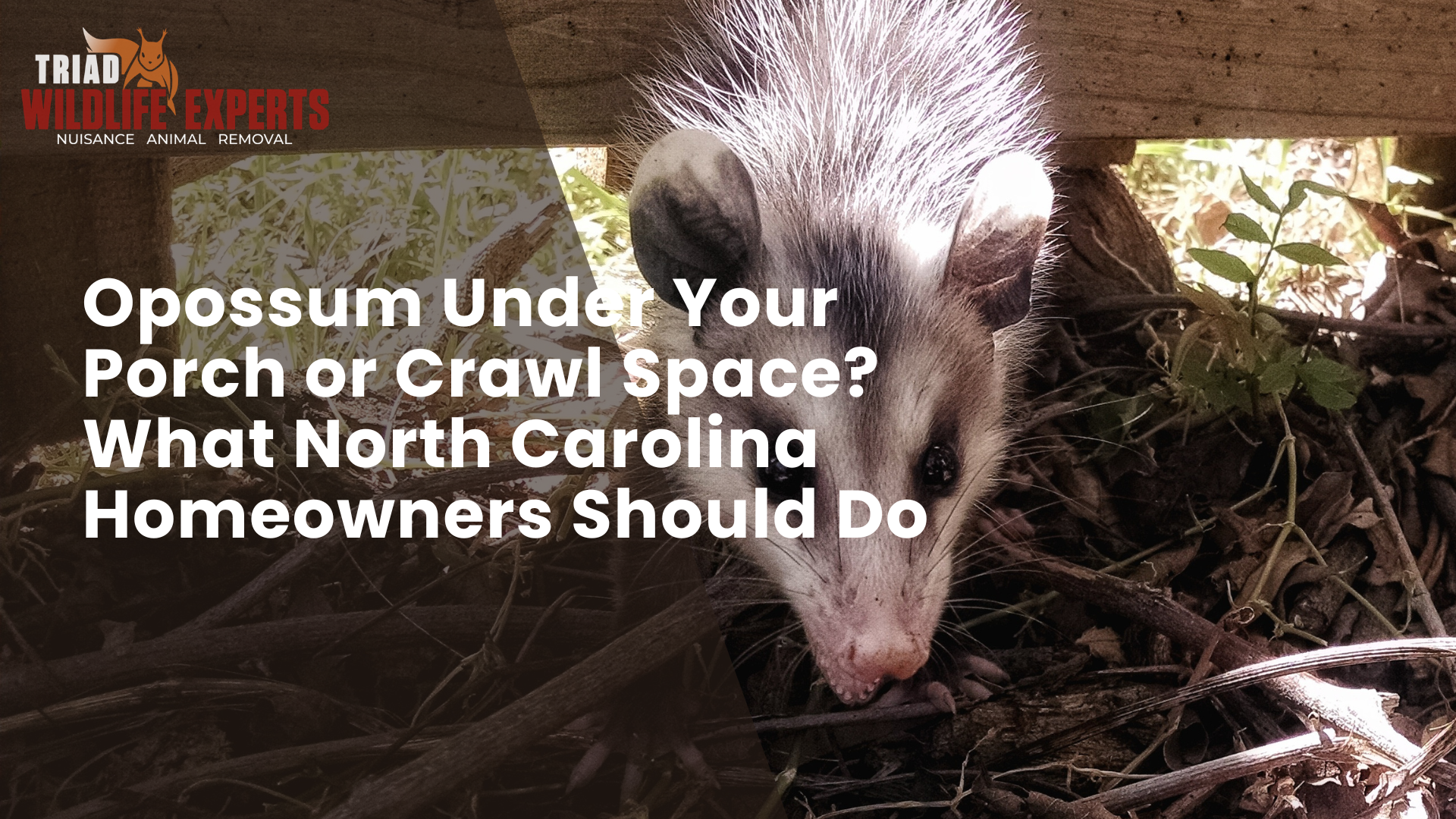
Finding an opossum near your home can be startling, especially when it disappears beneath your porch, deck, shed, or crawl space.
Opossums are common throughout North Carolina’s Piedmont Triad. While they are generally not aggressive, they may take shelter near homes when they find easy access to food, water, and a protected place to rest. As temperatures begin to cool in the fall, enclosed spaces around your property can become particularly appealing.
If you suspect an opossum has moved beneath your home, it is important to understand why it is there, whether it has established a den, and how to resolve the problem without trapping an animal inside.
Why Do Opossums Hide Under Porches and Crawl Spaces?
Opossums are opportunistic animals. They typically do not build elaborate dens of their own. Instead, they look for existing spaces that provide protection from weather and predators.
Around a home, these spaces may include:
Beneath porches and decks
Inside accessible crawl spaces
Under sheds and other outbuildings
Beneath stairs
Inside brush or wood piles
Around damaged foundation vents
Food is another major factor. Opossums may be attracted to properties where they can access:
Outdoor pet food
Unsecured garbage
Fallen fruit
Birdseed
Compost
Standing water
Insects and other small food sources
Removing these attractants may discourage a passing opossum. However, if an animal has already moved beneath a structure, removing food alone may not solve the underlying problem.
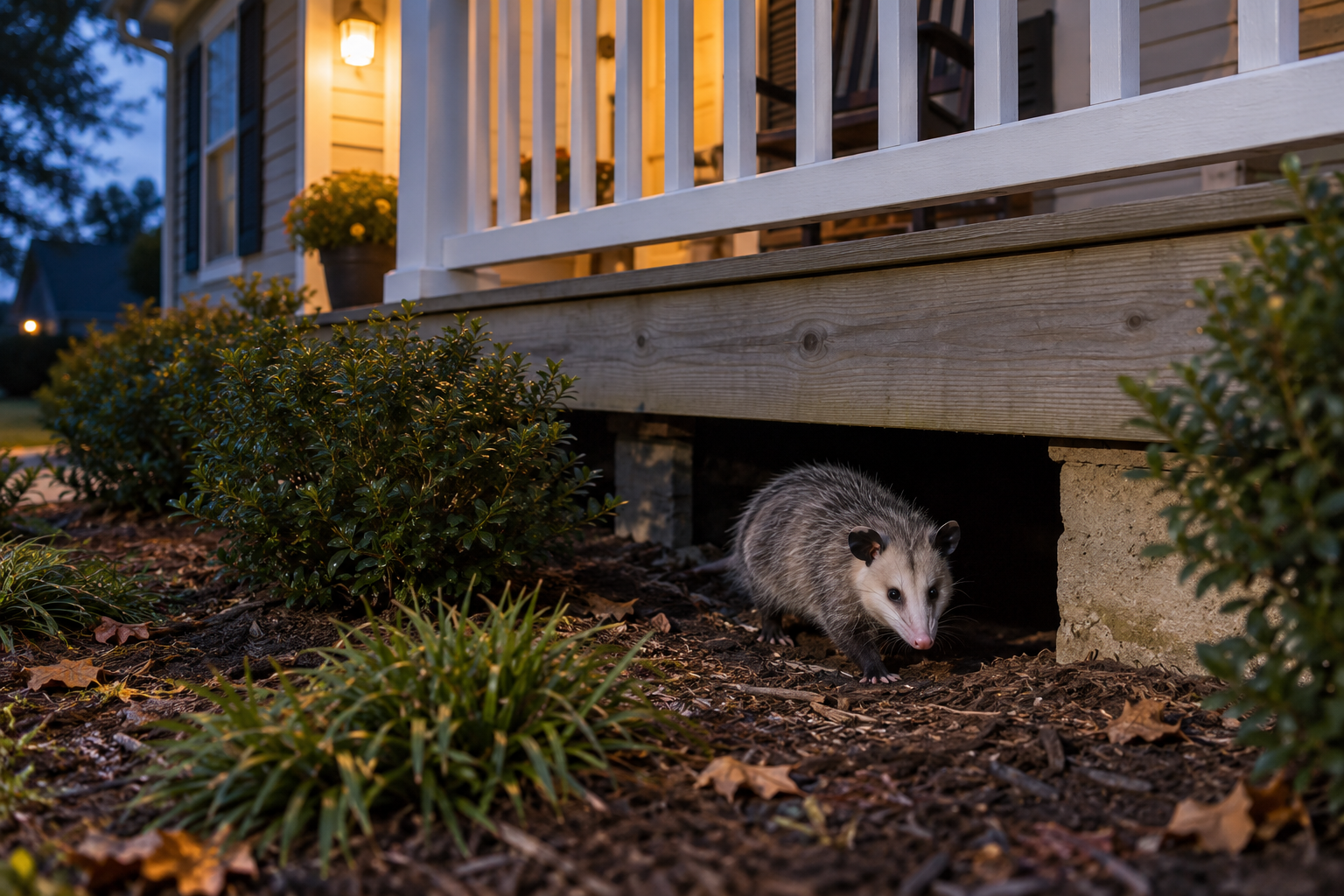
Is the Opossum Living There or Just Passing Through?
Seeing an opossum once does not always mean it has established a den. Opossums are nocturnal and may travel through several properties while searching for food.
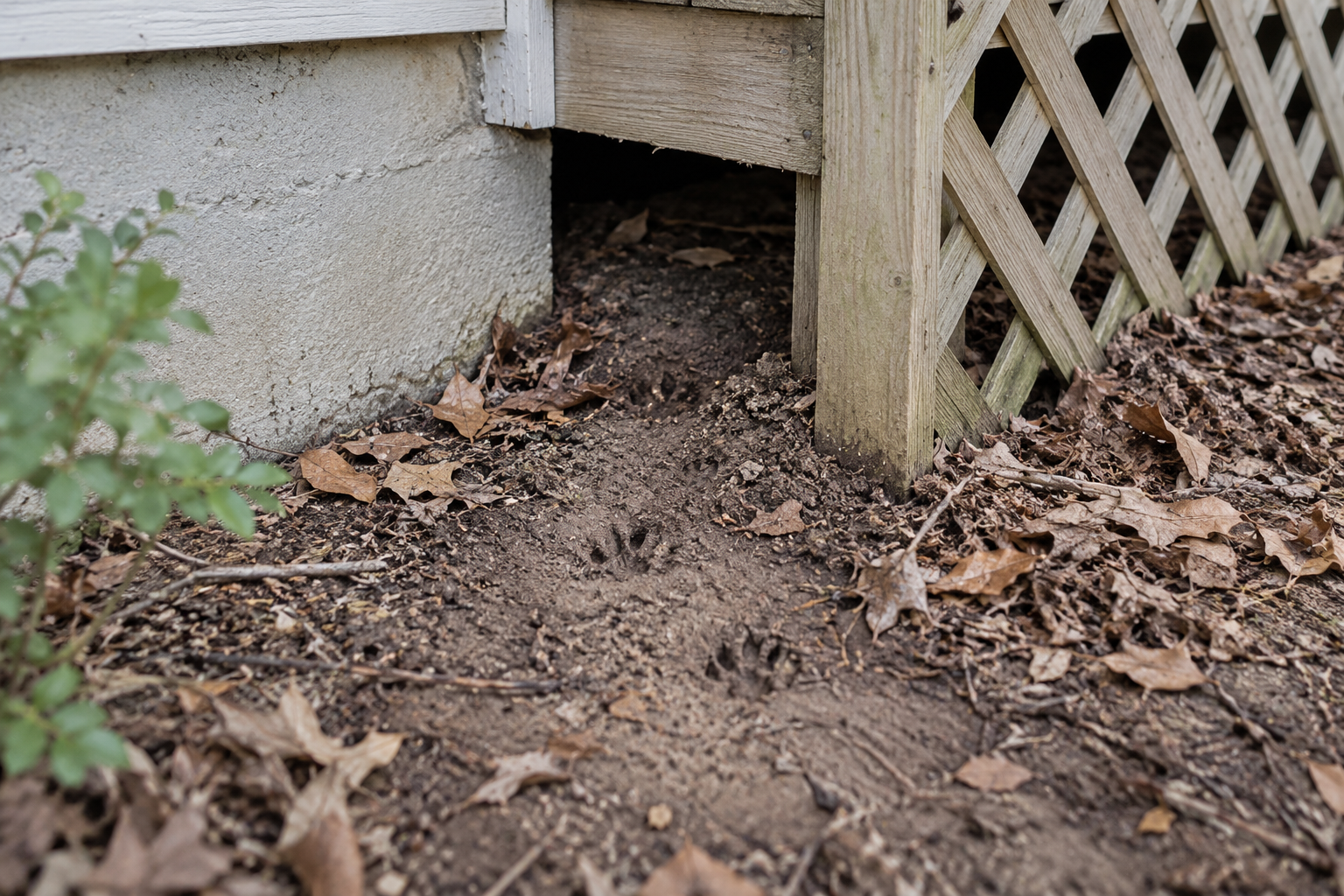
Repeated activity is more concerning. Signs that an opossum may be staying beneath your porch or inside your crawl space include:
Seeing the animal enter the same opening on multiple nights
Scratching, shuffling, or movement beneath the floor
Droppings near an entry point
A persistent musky or unpleasant odor
Disturbed insulation or ductwork
Damaged foundation vent covers
Nesting material near or inside the opening
A professional wildlife inspection can help determine whether the opossum is simply passing through or using the space regularly.
Triad Wildlife Experts provides humane opossum removal throughout Greensboro, High Point, Winston-Salem, and surrounding communities.
Are Opossums Dangerous?
Opossums usually prefer to avoid people and pets. When frightened, they may hiss, show their teeth, growl, or “play dead.” These behaviors are defensive and do not necessarily mean the animal is aggressive.
However, homeowners should still avoid handling or cornering an opossum. A frightened animal may bite or scratch if it feels trapped. Opossums can also introduce fleas, ticks, droppings, urine, and other contaminants into crawl spaces and areas used by pets.
Keep children and pets away from the animal and avoid reaching beneath a porch or entering a confined space to investigate it yourself.
Should You Seal the Opening?
Do not seal an opening until you are certain the animal is no longer inside.
Closing a crawl-space vent or blocking access beneath a porch while an opossum is present can trap it under the structure. It may then cause additional damage while attempting to escape. If young are present, sealing the opening could also separate them from the adult.
The correct sequence is:
Inspect the property and identify the animal.
Determine whether additional animals or young are present.
Remove or exclude the animal using an appropriate method.
Confirm that the space is empty.
Secure the entry point against future wildlife activity.
Professional inspection is especially important when visibility beneath the structure is limited.
How to Make Your Property Less Attractive to Opossums
Once the animal has been safely removed, a few property changes can help prevent another opossum from moving into the same space.
Secure Outdoor Food Sources
Bring pet food and water bowls indoors overnight. Keep garbage cans tightly closed and clean up spilled birdseed or fallen fruit.
Clear Potential Shelter
Remove unnecessary brush, debris, and wood piles near the foundation. Trim overgrown vegetation that provides cover around porches, decks, sheds, and crawl-space entrances.
Inspect Your Foundation Vents
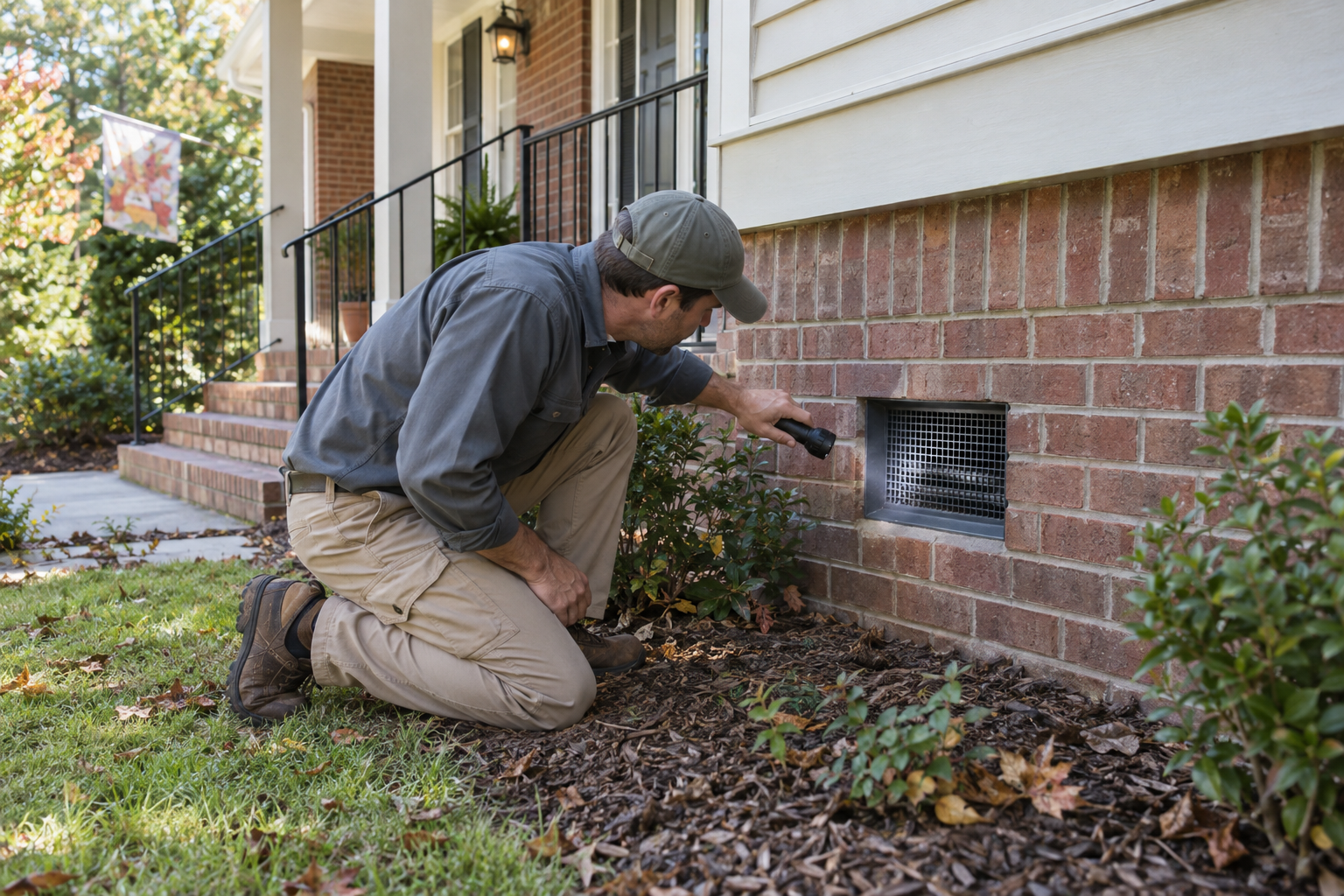
Plastic or damaged foundation vents can be pushed aside or broken by wildlife. Stronger foundation vent guards help protect crawl-space openings while preserving necessary airflow.
Check Beneath Porches and Decks
Look for gaps, loose lattice, disturbed soil, or damaged barriers. These openings should only be secured after a professional confirms that no animals remain beneath the structure.
Schedule a Wildlife Inspection
An inspection can uncover entry points that are easy to miss from ground level. It can also help determine whether droppings, odors, damaged insulation, or sanitation concerns need to be addressed.
Why DIY Opossum Removal Can Create a Bigger Problem
Trying to chase or trap an opossum without identifying how it entered may provide only a temporary solution. If the opening remains accessible, another animal can use the same space later.
Common DIY mistakes include:
Sealing an animal beneath the home
Separating an adult from its young
Placing traps in unsafe or ineffective locations
Handling contaminated droppings without protection
Using mothballs, poisons, or harsh chemicals
Closing vents in a way that interferes with crawl-space ventilation
Professional humane wildlife removal addresses both the animal and the conditions that allowed it to enter.
How Professional Opossum Removal Works
Every property is different, but professional opossum control generally begins with a detailed inspection.
The wildlife technician will look for:
Active entry points
Tracks, droppings, and nesting material
Damaged vents or barriers
Signs of additional wildlife
Areas that may need cleaning or repair
Once the situation is understood, the appropriate removal or exclusion method can be selected. After the animal is gone, vulnerable areas can be secured to reduce the chance of another wildlife problem.
This complete approach is more effective than simply removing the visible animal.
Get Help With an Opossum Under Your Home
An opossum beneath your porch may only be passing through, but repeated sightings, odors, noises, or crawl-space activity should not be ignored.
Triad Wildlife Experts provides professional opossum inspections, humane removal, entry-point repair, and wildlife prevention throughout Greensboro, Winston-Salem, High Point, Kernersville, and the surrounding North Carolina Triad.
If you think an opossum is living beneath your porch, deck, or crawl space, contact Triad Wildlife Experts or call (336) 365-0564 to schedule an inspection.
