

Ridge-Guard® Installation by Triad Wildlife Experts
One of our most effective wildlife prevention services is the installation of the AAC Distributing Ridge-Guard® system, a revolutionary solution designed to keep bats, birds, and other animals from entering your property through ridge vents.
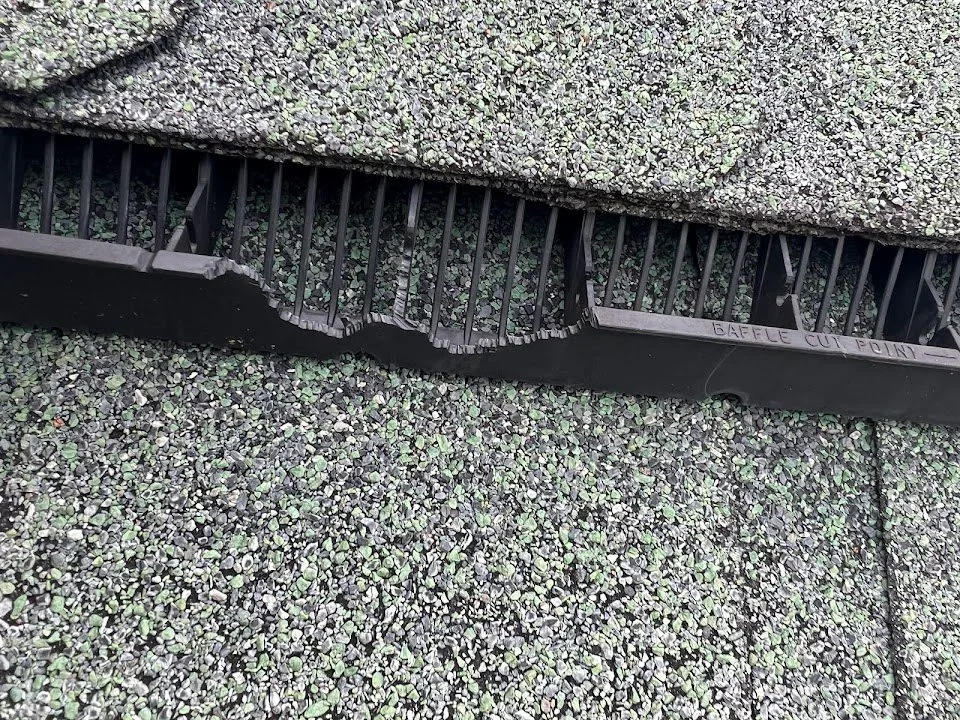
Ridge vents are a common entry point for wildlife, especially bats, due to their small openings. Ridge-Guard® is a patented, high-quality product that reinforces your roof’s ridge vents, blocking animals from gaining access while maintaining proper attic ventilation.
What is Ridge-Guard®?
Benefits of Ridge-Guard® Installation
Effective Wildlife Barrier: Prevents bats, birds, rodents, and other pests from entering your attic.
Long-Lasting Protection: Durable materials designed to withstand harsh weather conditions.
Preserves Roof Ventilation: Keeps your attic properly ventilated to prevent moisture buildup and maintain energy efficiency.
Cost-Effective Solution: Avoids expensive wildlife removal and property repairs in the long term.

The Triad Wildlife Experts Difference
When you choose Triad Wildlife Experts, you’re partnering with a team that:
Conducts comprehensive inspections to identify potential entry points.
Provides customized wildlife prevention solutions, including the installation of Ridge-Guard® and other exclusion systems.
Uses humane and eco-friendly methods to protect both your property and local wildlife.
Offers ongoing monitoring and maintenance services to ensure long-term effectiveness.
Frequently Asked Questions
-
Ridge-Guard may be appropriate when a roof has exposed, warped, loose, or wildlife-accessible ridge vents. Bats and other small animals can exploit gaps created as ridge-vent materials age or shift. A roofline inspection can determine whether the ridge vent is vulnerable and whether additional entry points, such as soffits or other roof vents, also need exclusion work.
-
Yes, but active bats should be addressed before their entry points are permanently secured. Professional bat exclusion typically allows bats to leave before vulnerable openings are sealed or protected. In North Carolina, timing is especially important because Wildlife Control Agents generally cannot perform bat eviction and exclusion except when specifically authorized. Learn more about professional bat removal.
-
No. Ridge-Guard® is designed to protect the vulnerable edges of a ridge vent without closing the ventilation opening itself. Proper ridge ventilation allows warm, moisture-laden attic air to escape, so completely sealing the vent would be counterproductive. Ridge-Guard® provides a physical wildlife barrier while allowing the existing ridge vent to continue functioning as intended.
-
Ridge-Guard was originally developed for bat exclusion, but the manufacturer also lists protection against animals and pests including mice, squirrels, snakes, raccoons, and large insects. The actual protection needed depends on the home's entry points; animals may also use soffits, foundation openings, attic fans, or other roof vents, so the entire structure should be evaluated rather than treating the ridge alone.
-
For an operating ridge vent, a purpose-built exclusion barrier is generally preferable to simply filling ventilation openings. Ridge vents need airflow, while Ridge-Guard® is designed to reinforce vulnerable areas without eliminating that airflow. Sealants may still be appropriate for separate construction gaps, but the correct method depends on whether an opening is an intended ventilation component or an unintended wildlife entry point.
-
Protection should address all vulnerable sections of the ridge vent rather than leaving accessible gaps that wildlife can exploit. The exact scope depends on the roof design, vent condition, transitions, end points, and evidence of animal activity. A professional inspection can identify where Ridge-Guard® is required and whether other parts of the roofline need complementary exclusion measures.
-
Ridge-Guard is designed for mechanical attachment to the roof, and proper installation is important for preventing water intrusion. AAC Distributing states that correctly installed fasteners are positioned and sealed to protect the penetration. Roof construction varies, however, so installers should evaluate shingle condition, decking, ridge-vent configuration, and existing roof damage before installation.
-
It can depend on the warranty terms. AAC Distributing notes that installation may affect coverage at penetration points while not necessarily affecting unrelated portions of the roof or the manufacturer's separate shingle-material warranty. Because roofing warranties differ substantially, homeowners should review their specific contractor and manufacturer terms before having any exclusion product fastened to the roof.
-
The installation cost can vary with the amount of ridge vent requiring protection, roof height and pitch, accessibility, vent condition, roof complexity, existing wildlife activity, and additional entry points that need repair or exclusion. An active infestation may also require removal or cleanup before prevention work is completed. A property-specific inspection is therefore more useful than a generic per-home price.
-
AAC Distributing manufactures Ridge-Guard from 20-gauge galvannealed expanded steel with a powder-coated finish designed for strength, corrosion resistance, and outdoor durability. Because it is a rigid metal exclusion system, it is intended to resist wildlife activity more effectively than easily displaced or chewable materials around vulnerable ridge-vent edges.
-
Ridge-Guard is intended as a long-term exclusion product, but the roof should still be inspected after major storms, falling branches, roofing work, or visible damage. External impacts can damage both the guard and the roofing surface beneath it. If the roof or ridge vent is replaced, the exclusion system should also be evaluated to make sure wildlife protection remains continuous. Learn more about us and our team's approach to long-term wildlife prevention.
-
Not by itself. Ridge-Guard specifically addresses ridge-vent vulnerabilities, while animals may enter through other roof vents, attic fans, foundation vents, soffits, fascia gaps, or construction openings. A comprehensive wildlife inspection should identify every active and potential entry point. Depending on the findings, additional protection such as attic fan guards or foundation vent guards may be appropriate.
-
The property should first be inspected for active wildlife, damaged or warped ridge vents, roof condition, and other possible entry points. If animals are already inside, the appropriate removal or exclusion process should be completed before permanent openings are secured. Once the roofline is assessed, the installer can determine the Ridge-Guard® coverage and any complementary repairs or exclusion measures needed. Homeowners can request an inspection or estimate.