
Raccoon Babies in Your Attic? 7 Signs NC Homeowners Must Know
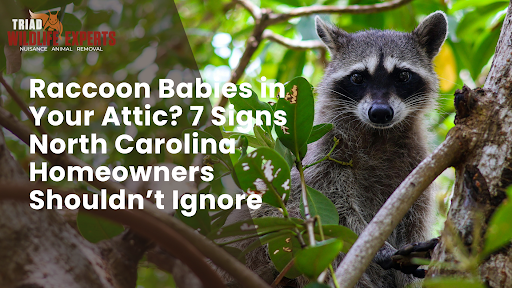
Spring in North Carolina brings warmer weather - and unfortunately, raccoon baby season. If you’re hearing unusual noises above your ceiling, there’s a good chance a mother raccoon has chosen your attic as a safe place to raise her young.
Understanding the signs early can help you avoid serious damage, contamination, and costly repairs.
Why Raccoons Choose Attics in North Carolina
Raccoons typically give birth between March and May, and they actively seek:
Warm, quiet, protected spaces
Easy access points (rooflines, vents, soffits)
Shelter from predators and weather
Your attic checks every box.
7 Signs You May Have Raccoon Babies in Your Attic
1. Scratching or Thumping Noises (Especially at Night)
Raccoons are nocturnal, so you’ll often hear:
Heavy footsteps
Scratching or dragging sounds
Movement above ceilings or inside walls
2. Loud Vocal Sounds (Chirping, Crying, Whining)
Baby raccoons make distinct noises, including:
High-pitched chirps
Whining or crying sounds
These are often heard during the day when the mother is away.
3. Strong, Unpleasant Odors
Raccoons create designated areas for waste, leading to:
Ammonia-like smells
Lingering, musty odors
Air quality issues inside your home
4. Visible Roof or Vent Damage
Common entry points include:
Torn or lifted shingles
Damaged soffits or fascia
Open attic vents
5. Insulation Damage or Debris
Raccoons will:
Tear apart insulation for nesting
Leave behind debris and droppings
Compress insulation, reducing energy efficiency
6. Tracks or Droppings Around Your Home
Look for:
Small hand-like footprints
Droppings near entry points or along rooflines
7. Seeing an Adult Raccoon on Your Roof
If you spot a raccoon repeatedly near your roofline, it’s a strong indicator she may have babies inside.
Why You Shouldn’t Handle This Yourself
Attempting to remove raccoon babies without proper training can:
Separate babies from the mother (leading to more damage)
Put you at risk of bites or disease
Violate North Carolina wildlife regulations
Professional removal ensures safe, humane handling and full exclusion.
What Professional Raccoon Removal Includes
A proper wildlife removal process should include:
Full attic inspection
Safe removal of mother and babies
Sealing all entry points
Sanitization and odor control
Insulation restoration if needed
Raccoon Removal in North Carolina
If you’re hearing noises or suspect raccoon activity, acting quickly can prevent further damage.
At Triad Wildlife Experts, we specialize in:
Humane raccoon removal
Attic remediation and cleanup
Long-term prevention and sealing
Final Thoughts
Raccoon infestations escalate quickly - especially during baby season. If something sounds off, trust your instincts and have it inspected.
